Mars Facility
The Mars Facility (MMRF-A01 / Station A01) is a simulated Mars research station used to develop, test and visualize generative hardware systems under controlled constraints.
What the Facility Is
The facility represents a Mars research station, implemented as a controlled system environment.
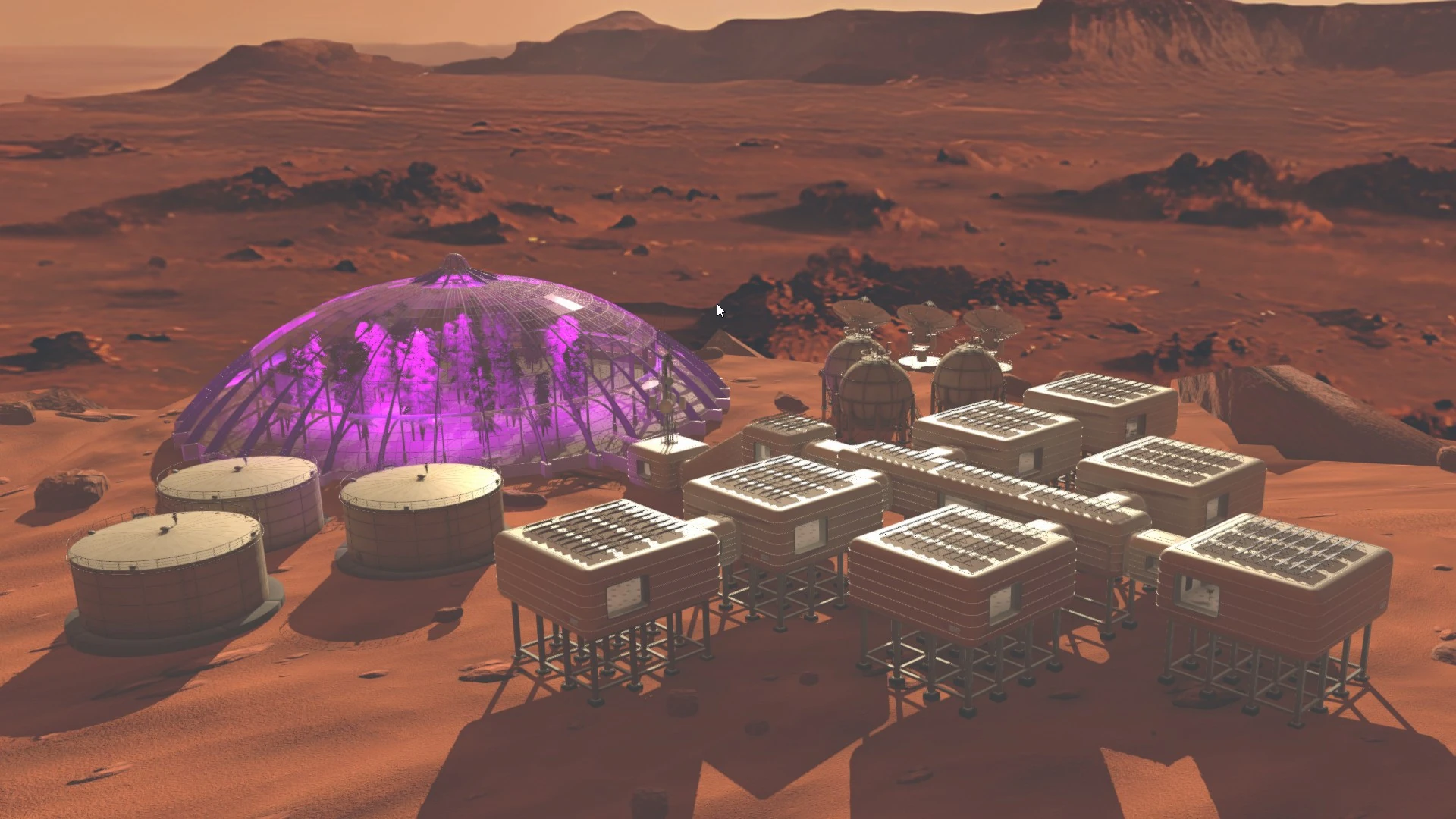
It is not a remote installation, but a simulation designed to model operation under Martian constraints.
All processes — generation, assembly, testing and operation — are executed and observed within this environment.
Why Mars
Mars represents an environment where systems must operate under strict constraints.
Limited resources, lack of supply chains and long maintenance cycles require devices to be generated, adapted and reused locally.
These conditions define the requirements for generative hardware more clearly than any terrestrial environment.
Unity-Based Simulation
The facility is implemented as a real-time 3D simulation built with Unity.
It visualizes both devices and the processes that create them.
Production, assembly and system behavior are represented as part of a continuous environment.
Purpose of the Simulation
The facility provides a consistent framework to test systems under defined constraints.
These constraints include limited resources, modular infrastructure and reduced manual intervention.
The goal is to validate that systems can generate and operate devices autonomously.
System Environment
The facility models a complete device lifecycle within a single environment.
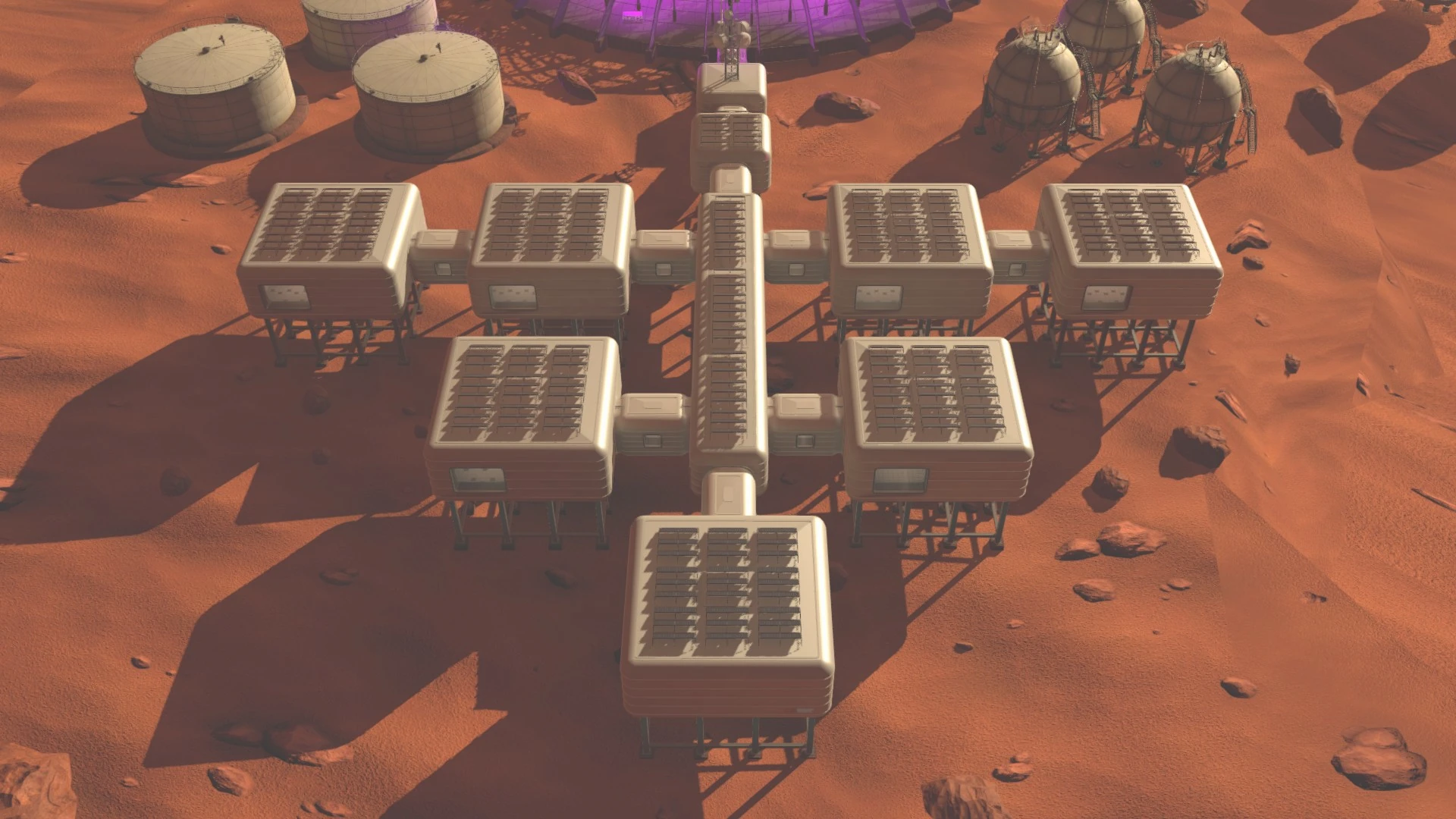
This includes material processing, additive manufacturing, electronics integration, testing and reuse.
All components are designed to operate as part of a closed-loop system.
Integrated System Node
The facility itself is part of the Martian Micro system.
It is connected to FeatureCloud and operates using the same feature-based architecture as devices.
Processes inside the facility are defined, monitored and coordinated through deployed features.
Real and Virtual Interaction
Virtual and physical devices are connected through the same system.
Devices inside the simulation can communicate with real hardware in real time.
This allows behavior to be tested, observed and validated across both environments simultaneously.
Interface and Visualization
MetaPhone interfaces are embedded within the facility.
System state, device behavior and processes are visible directly within the environment.
The facility acts as an operational interface, not just a representation.
Digital Twin Characteristics
The facility shares properties with a digital twin, but is not a full representation of a physical counterpart.
It reflects real system state and interacts with real devices and infrastructure.
At the same time, it remains a controlled environment used for development and validation.
Arcadia Planitia (Reference Environment)
The simulated environment is based on Arcadia Planitia, a region characterized by stable terrain and accessible subsurface resources.
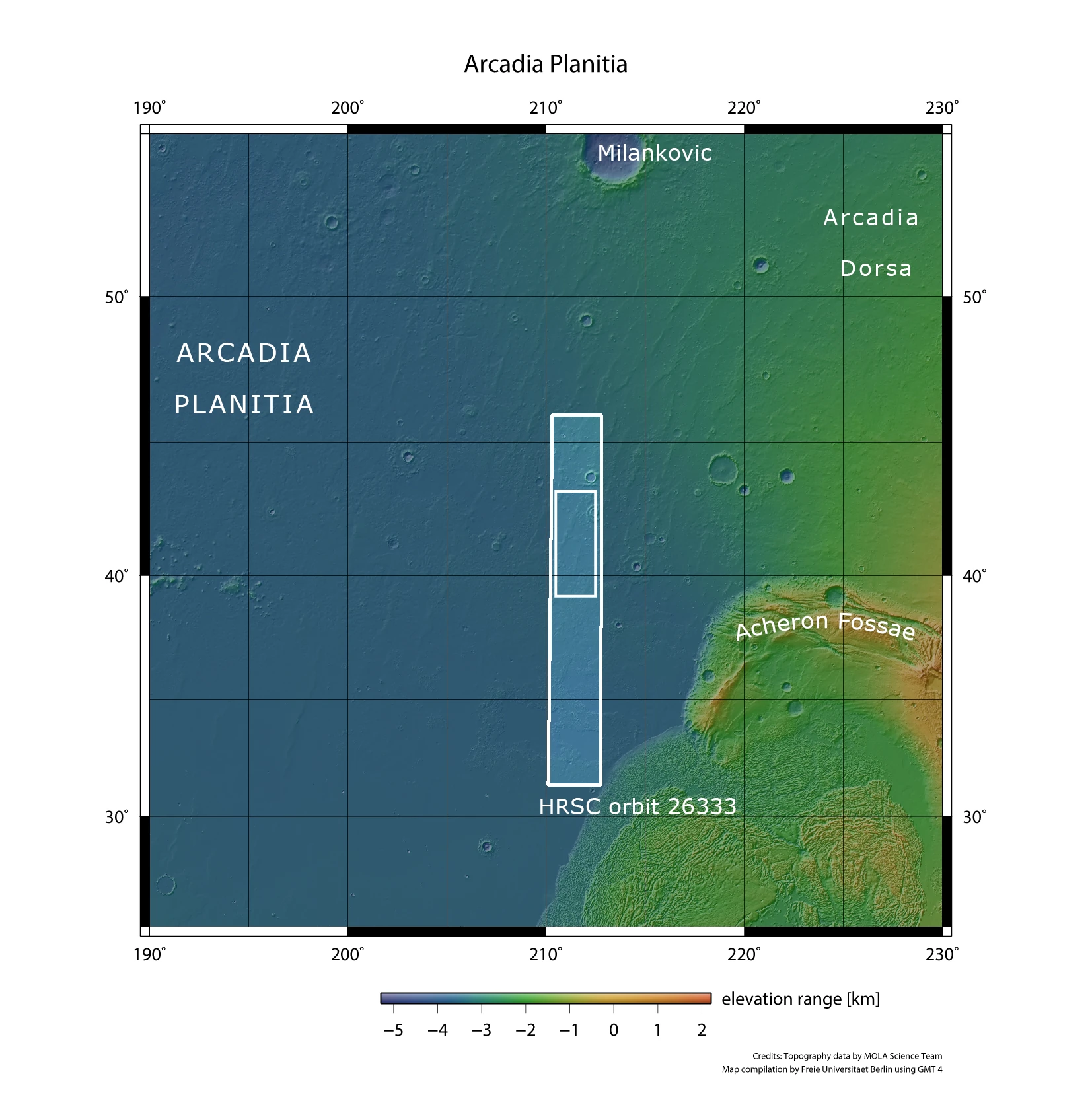
Arcadia Planitia is also considered a candidate region for future autonomous Mars missions due to its environmental stability and resource availability.
This reference defines boundary conditions such as limited supply, environmental stress and long operational cycles.
The environment is used to derive system requirements, not to represent a physical deployment.
Visualization and Operation
The facility is both a test system and an operational layer.
It makes system behavior, device generation and infrastructure processes observable.
This allows complex system interactions to be understood and validated in real time.